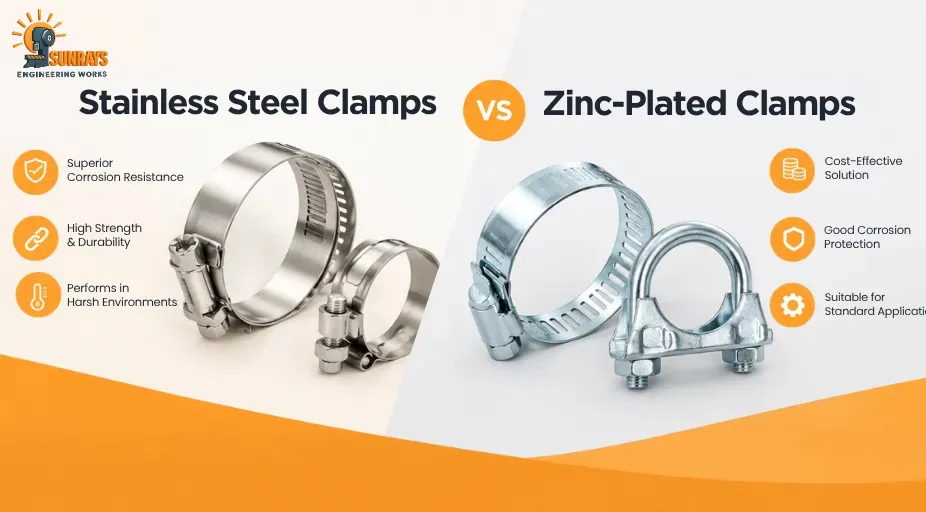
Comparison between Stainless Steel Clamps vs Zinc-Plated Clamps is a typical comparison made to choose the best option among automobile and industrial clamps.The main difference between stainless steel clamps and other types is how rust is handled. Stainless steel is rust-resistant due to the protective layer and does not require any other coating. Other clamps, such as zinc-plated clamps, have a zinc coating to protect the steel. The best clamp for a particular application depends on the type and level of environmental exposure, for example, the type and level of moisture and chemicals present in the environment. The zinc coating on clamps is almost completely compromised in the marine environment due to exposure to salt water. In such cases, the use of stainless steel clamps is required.
This guide explains how each material protects itself, where each one works well, and how to match the clamp to the place it will actually be used. It is written for buyers, engineers and procurement teams who order clamps in volume, including the exhaust and industrial clamps made by Clamps India.
Quick Answer: Stainless Steel Clamps vs Zinc Plated Clamps
Zinc-plated clamps can be a practical option for dry, sheltered installations where corrosion exposure is limited and initial cost matters. Stainless steel clamps are generally worth considering in environments with regular moisture, salt exposure or demanding cleaning conditions, but the appropriate choice depends on the stainless steel grade, the zinc coating, and the conditions in which the clamp will operate. For applications where maintenance or replacement is difficult, evaluate the expected service conditions before choosing a clamp material.
One point is easy to miss. The finish decides how long a clamp keeps its strength, but the base material, thickness and design decide how much load it can carry in the first place. A stainless clamp is not automatically the stronger one. It simply stays sound for longer when conditions are harsh.
What Are Zinc-Plated Clamps?
Steel is the base of zinc-plated clamps, with zinc providing the outer protective layer. The level of protection zinc provides depends on things like the coating thickness, the process used to apply the zinc, and the environment in which the clamps are installed. These are things to consider when deciding on which zinc-plated clamp to use for an installation.
How Zinc Plating Protects Steel
Zinc-plated clamps benefit from two forms of corrosion protection. The zinc coating separates the steel from the surrounding environment, while its electrochemical properties allow it to corrode preferentially when a small area of steel becomes exposed. This sacrificial action can help protect the exposed area near minor coating damage. However, the protection is limited by the amount and condition of the remaining zinc, so damaged clamps should be inspected according to their application and service conditions.
The protection is limited, though. Moisture, abrasion and chemical exposure use up the zinc layer over time. Once it is gone or worn through at a point, the steel underneath starts to rust.
Where Zinc Plated Clamps Work Well
- Indoor and dry installations
- Sheltered areas such as protected engine bays and enclosed equipment
- General industrial use where moisture is limited
- Projects with tight budgets and easy access for replacement
- Short-term or temporary connections
Where Zinc Plated Clamps Fall Short
Zinc-plated clamps are a weak choice for marine, coastal, chemical, food-processing and continuously wet environments. Road salt and repeated wet and dry cycles wear the coating down faster than most buyers expect. Once the steel is exposed, the band weakens, and a clamp that was cheap to buy becomes expensive to replace.
What Are Stainless Steel Clamps?
Stainless steel clamps depend on the corrosion resistance of their alloy, unlike zinc-plated clamps, for which corrosion resistance comes from the zinc coating. Whether or not stainless steel clamps are suitable depends on the grade of stainless steel and the conditions of use. Choosing the appropriate grade is important, especially in the presence of moisture and corrosive substances (like salt). While stainless steel clamps may cost more than zinc-plated clamps at the time of purchase, the choice has to be made depending on the needs of the application, maintenance, and expected service conditions.
How Stainless Steel Resists Corrosion
Stainless steel is made up of a minimum of 10.5% chromium. Chromium in the presence of oxygen forms a thin, impervious film on the surface. Stainless steel can rebuild its oxide layer and, thus, its protective film if conditions permit.
304 and 316 Stainless Steel: Why the Grade Matters
Stainless steel grades vary, and that impacts a clamp’s corrosion resistance and performance.
Grade 304 stainless steel contains about 18% chromium and 8% nickel, and is suitable for many freshwater, outdoor and general industrial applications. Its weak point is chloride. Grade 304 stainless steel is more susceptible to pitting and crevice corrosion in chloride-rich environments, like roads treated with salt, coastal areas, and chlorinated water.
Grade 316 stainless steel contains molybdenum, typically around 2–3%, which enhances its resistance to chloride-induced pitting and certain corrosive chemicals. It is the usual choice for coastal, marine, pool and washdown conditions, and it normally costs more than 304.
Other stainless grades are also used in clamps, including 400-series grades in some exhaust parts. Their corrosion resistance varies between grades 304 and 316, so verify the specified grade rather than relying on the stainless steel label alone.
Where Stainless Steel Clamps Work Best
- Coastal and marine installations
- Outdoor equipment exposed to rain and humidity
- Vehicles that meet road salt and frequent washing
- Food, beverage and pharmaceutical washdown areas
- Chemical and process applications, subject to compatibility with the specific media.
- Locations where replacing a clamp is slow or costly
Stainless Steel Clamps vs Zinc Plated Clamps: Side-by-Side Comparison
Protection method | Zinc coating over carbon steel | Chromium oxide film within the alloy |
Corrosion resistance | Suitable for dry, mild environments; less resistant to moisture and salt exposure. | High, depending on the grade |
When scratched | Nearby zinc protects for a while, then the steel can rust | The surface film reforms |
Strength | Set by the base steel, size and design | Set by the grade, size and design |
Salt and chemical exposure | Weak | Better, with 316 stronger than 304 |
Upkeep | Periodic inspection | Low |
Initial cost | Lower | Higher |
Long-term cost in harsh conditions | Can rise with replacements and downtime | Often lower |
Best for | Dry, sheltered, budget-led jobs | Wet, salty, chemical or hard-to-service jobs |
Key Differences Between Stainless Steel and Zinc Plated Clamps
Corrosion Resistance
This is the biggest difference. Zinc plating depends on a layer that is slowly used up. Stainless steel depends on a property of the metal itself. In a dry workshop, the gap may stay small for years. Near the sea, or on roads treated with salt, it widens quickly.
Strength and Load Capacity
Zinc plating is a surface treatment, so it does not change how strong the steel is. A high-strength zinc-plated carbon steel clamp can carry more load than a 304 stainless clamp of the same size. Compare strength using the material grade, thickness and the supplier’s specification, not the finish.
Where the two differ is durability. A plated clamp that corrodes loses material and clamping force over time, while a stainless clamp keeps its properties longer in wet conditions.
Heat and Vibration in Exhaust Applications
Exhaust clamps work through heat, vibration and repeated wet and dry cycles. A zinc coating is a thin layer, and heat, movement and abrasion can wear it down faster, exposing the steel beneath. Stainless steel carries its protection through the full thickness of the metal, so it copes better with these cycles. Temperature limits depend on the grade, the clamp design and the rest of the assembly, so ask the supplier what working conditions a clamp is made for instead of assuming.
Cost and Total Cost of Ownership
Zinc-plated clamps are cheaper to buy, and in dry conditions that lower price is the right call. In harsh conditions, look past the unit price. Count replacement labour, downtime, the risk of leaks or loose joints, and the cost of repeat shipments. A small price difference per clamp is often less than the cost of one early failure.
Mixing Metals and Galvanic Corrosion
When two different metals touch in a wet environment, the less noble one can corrode faster. A stainless clamp on a zinc-coated or mild steel fitting in a damp or coastal setting can speed up corrosion of the plated part. In dry indoor use, this is rarely a problem. In wet conditions, match the materials where possible or use insulating washers or sleeves.
The Plated Bolt Problem: Check the Whole Clamp
Many clamps sold as stainless use a stainless band with a zinc-plated bolt, nut or screw. The band lasts, but the hardware rusts first, seizes, and makes the clamp hard to adjust or remove. This matters most for U-bolt, T-bolt and worm drive styles, where the fastener does the tightening.
When you specify stainless steel clamps for wet or salty service, confirm the material of the band, the bolt and the nut separately. Ask for every part to be stainless and request the grade for each one.
Which Clamp Should You Choose? A Practical Guide by Environment
Dry indoor or workshop | Zinc plated | Low corrosion risk and lower cost |
Outdoor, away from the coast | 304 stainless; zinc plated only for short or sheltered service | 304 handles rain and humidity, while plating wears faster outdoors |
Coastal, marine or road-salt exposure | 316 stainless | Molybdenum resists chloride pitting |
Food, beverage or pharmaceutical washdown | 316 stainless | Suits frequent cleaning and chloride-bearing sanitisers |
Chemical processing | Stainless, with the grade checked against the media | Resistance depends on the chemical involved |
Vehicle exhaust systems | Stainless where salt, moisture and heat cycles apply; zinc plated for dry, cost-led use | The coating can wear under heat and abrasion |
What to Ask Your Clamp Supplier Before You Order
A short list of questions removes most of the guesswork:
- Which stainless grade is used for the band, the bolt and the nut?
- For zinc-plated clamps, which plating standard applies (ASTM B633 is a common reference) and what coating thickness is used?
- Is salt spray test data available for the finish (ASTM B117 is the usual test method)?
- Can the supplier provide material certificates?
- What working temperature and exposure is this clamp designed for?
- Are samples available for testing before a bulk order?
Stainless Steel and Zinc Plated Clamps from Clamps India
Clamps India is the export-facing brand of Sunrays Engineering Works, a manufacturer in Faridabad, India, that has been making clamps and sheet metal components since 1985. The range includes exhaust clamps, V-band clamps and pipe connectors, and exhaust clamps are offered in both stainless steel and zinc-plated versions. Clamps India supplies buyers across Asia, Europe, Australia and North America.
Whichever side of the stainless steel clamps vs zinc-plated clamps question your project falls on, the most useful thing you can send with an enquiry is the real operating environment: where the clamp will sit, whether it sees moisture or salt, the temperature range, and the sizes you need. With that information, the material discussion starts from actual conditions instead of assumptions.
Conclusion
The right answer in the debate over stainless steel clamps vs zinc-plated clamps is the one that fits where the clamp will work. Zinc-plated clamps give sound value in dry, protected, budget-led applications. Stainless steel clamps repay their higher price in wet, salty and hard-to-service conditions, provided the grade is right, and the bolts and nuts match the band.
If you are sourcing exhaust or industrial clamps and want to compare both options, send your application details to Clamps India so the team can help you decide which material suits the job.
Frequently Asked Questions
Is stainless steel better than zinc-plated steel for clamps?
In wet, salty or chemical conditions, yes, because its corrosion resistance comes from the alloy itself. For dry, sheltered and cost-led use, zinc-plated clamps are often enough and cost less. Neither is the best choice for every job.
Does a zinc-plated clamp rust?
Eventually, yes. The zinc layer slows rust and corrodes first, but once it wears away from moisture, salt or abrasion, the steel underneath starts to rust. This happens sooner outdoors and in salty air.
Is stainless steel worth the extra cost?
Usually, when the clamp sits in wet, coastal or corrosive conditions, or when replacing it is difficult. In dry indoor use, zinc-plated clamps are often enough, and the extra spend buys little.
Which clamp is better for outdoor use?
Grade 304 stainless handles typical outdoor exposure such as rain and humidity. Near the coast or on salted roads, 316 is the safer grade. Zinc-plated clamps suit sheltered outdoor spots or short service life.
What is the difference between 304 and 316 stainless steel clamps?
316 contains molybdenum, which improves resistance to chloride pitting. 304 is a good general-purpose grade, while 316 is preferred near salt water, in pools and in washdown areas.
Can stainless steel clamps rust?
They resist rust far better than plated steel, but they are not immune. Chlorides, a damaged surface film or contact with dissimilar metals can cause staining or pitting. Choosing the right grade lowers the risk.
How can I tell a stainless clamp from a zinc-plated clamp?
Colour alone is unreliable because both look silver. Check grade markings, material certificates and the supplier’s test reports. A magnet helps only a little: plated carbon steel is magnetic, but some stainless grades, such as the ferritic 400-series, are magnetic too. Also check the bolt and nut separately from the band.
How long does zinc plating last on a clamp?
There is no fixed lifespan. It depends on the environment and the coating thickness. In dry indoor conditions, plated clamps can last for years, while in humid, coastal or salty conditions, the coating is used up much faster.