
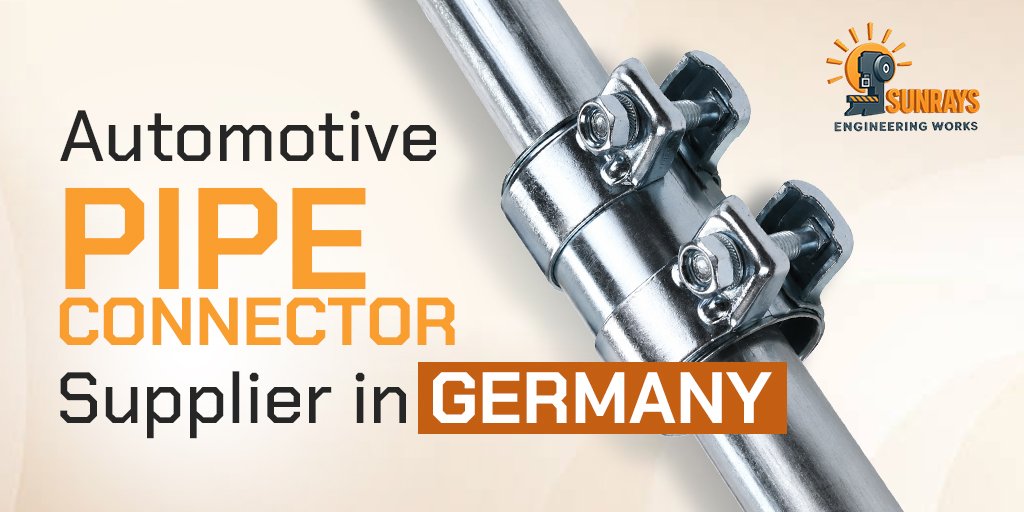
Relying solely on the lowest price when choosing an automotive pipe connector supplier in Germany is insufficient. It is important to take into consideration various aspects, such as the type of materials used, size accuracy, and consistency of production; particular application needs; possibilities for customization; size of the order; delivery times; and consistency of supply in the long run. This holds true especially when components for exhaust systems, cooling systems, air intake systems, and liquid transfer lines are sourced.
Germany has one of the best automotive supply chains in the world, consisting of car manufacturers, first-tier and second-tier suppliers, aftermarket wholesalers, engineering companies, and manufacturers of different components. Pipe connectors play an essential role in this supply chain by combining and supporting pipes, tubes, and hoses.
B2B purchasers are not necessarily limited only to domestic suppliers. Thus, purchasing departments can also refer to international manufacturers, such as Clamps India, for automotive pipe connections, provided that factors such as price, applicability, production capacity, and the need for customization support wider purchasing practices.
This guide presents the various types of products supplied for automotive pipe connections as defined by their characteristics, all necessary criteria to be paid attention to, and the manners of defining an appropriate domestic or foreign supplier who would be able to reach steady supplies for a long time
What Automotive Pipe Connection Components Actually Do?
Automotive tubing connection components are fittings designed to connect, fasten, support, or otherwise join tubes and pipes installed through a vehicle. The way they are manufactured may differ significantly due to factors like the diameter, material, wall thickness, design, working conditions, as well as joining method.
A connector used in an exhaust system operates under different conditions compared to one used in a cooling system or an air intake system. Exhaust applications may deal with high temperature, vibration, moisture, road debris, and corrosion, while cooling and fluid systems usually focus on tolerance to pressure and temperature range, fluid compatibility, and durability of sealing.
Thus, it is very important for customers to start evaluation of suppliers with specific application of the component rather than just choosing standard products available on the market.
Why Do These Small Components Matter So Much?
Automotive piping works in tough environments. Over time components can be affected by vibration, thermal cycling, moisture, road debris, continuous movement and temperature changes.
Choosing the right connector helps to:
- Secure Joining of Pipes, Tubes
- Running condition mechanical stability of vehicle
- Vibration and movement resistance
- Good corrosion resistance >
- Consistent, repeatable assembly
- Easier to look after
- Dependable fit between connected components
Consistency is key especially for manufacturers, distributors and other high volume buyers. Small dimensional discrepancies between production lots can lead to assembly problems, increase the need for inspections, cause rejected parts, and result in increased costs for replacements.
The goal, therefore, is not just to get a good first quote. Buyers need to identify a supplier that can deliver the agreed specification consistently on repeat orders.
Types of Components Used in Automotive Applications
Different systems in vehicles have different engineering requirements. Before contacting an automotive pipe connector supplier in Germany, procurement teams should be aware of its application, working environment, dimensions, material requirements and method of connection.
- Exhaust Pipe Connection Parts
Exhaust systems are subjected to heat, vibration, moisture, road contaminants and environmental wear. Therefore, the pipe connection components used in these assemblies must satisfy both mechanical and thermal conditions.
Things to keep in mind:
- Pipe size
- Thickness of wall
- Material
- Establishing a connection
- Temperature exposure
- Mechanical strength required
- Exposure to corrosion
Stainless steel is typically used when corrosion resistance is important, but it should not be automatically chosen for every application. The selection of material should consider the real operating environment and engineering requirements. The supplier should be technically capable and be able to explain the reasoning behind the recommended material and configuration.
- Stainless Steel Components
Stainless steel connectors are appropriate for applications exposed to moisture and environmental conditions such as road salt, water and repeated temperature changes.
Buyers should specify before buying stainless steel components:
- Material grade Dimensions
- Thickness
- surface treatment
- Operating environment
- Allowable tolerances
A technically competent supplier should be able to look at these requirements and be able to give relevant technical guidance before commercial discussions are finalized.
- Tube Connection Components
Tube Connectors are used to join or secure rigid tubing in several vehicle systems. The dimensional accuracy is particularly important in these applications, since the component has to fit properly with the associated tube or pipe.
Typical main parameters are:
- Outside diameter
- Thickness of the wall
- Grade of material
- Working temperature
- Working pressure
- Connection Type
- Environmental exposure”
- Necessary Tolerances
For OEM and Tier supplier applications, dimensional consistency is even more important as components can be installed multiple times throughout long production runs. So, consistent manufacturing and controlled inspection are key factors in supplier evaluation.
- Custom Connection Solutions
Standard catalog parts don’t always fit the needs of a particular application. Certain projects require special sizes, thicknesses, mounting methods, materials, geometries or configurations that are not standard products.
Custom manufacturing is a good option when a part is not a typical design. Buyers should provide for a proper quotation:
- Engineering drawings
- Dimensions:
- Tolerances
- Material requirements
- Anticipated quantities
- Details of application
- Growing demands
- Operating conditions of relevance
Buyers should make sure that an automotive pipe connector supplier in Germany is able to work from controlled technical drawings and produce parts to application-specific requirements. Not all suppliers have equal engineering and customization capabilities.
Key Factors for Supplier Evaluation
The process of supplier selection involves technical, commercial and supply-chain assessment. A lower unit price does not always translate into a lower overall procurement cost, if quality issues, production delays, rejected batches or additional inspection needs offset the initial savings.
- Construction material and quality
The material has to fulfilll the mechanical, thermal and environmental requirements of the application. The component and the operating conditions are suitable for stainless steel or other steel grades.
Buyers should ask about before placing an order:
- Material specification
- Material thickness.
- Manufacturing process
- Surface processing
- Inspection process
- Dimension control
- Good documentation
- Batch-to-batch reproducibility
A good supplier should be able to tell you very clearly how quality is monitored through manufacture and how finished components are checked against the agreed specification.
- Dimensional Accuracy and Tolerances
Automotive components often have to be kept within certain dimensional boundaries. Assembly problems can occur due to variations in diameter, thickness, hole position, geometry or fastening locations.
Buyers should be aware of the supplier’s inspection process and agree on required tolerances prior to production. For repeat orders, discuss dimensional control, inspection methods, conformity verification and documentation
- Production Capacity
It is not the same to make prototypes or small quantities as it is to make sustained bulk production. A supplier might make good first samples but then run into problems when the volumes go up.
Important areas to consider are:
- Production equipments
- Production capacity
- Quality control systems
- Lead time for production
- Minimum order quantity:
- Repeat order ability
- Packing capacity
- Ability to hold specifications over time
This becomes critical when components are incorporated in an ongoing production program. Long-term supply needs both manufacturing capacity and process consistency.
- Customization Ability
Application-specific requirements may necessitate modification of standard components, including material, dimensions, thickness, shape, configuration and mounting points.
When evaluating a supplier, buyers should verify that the manufacturer can review engineering drawings and manufacture components as specified in the agreement. A defined technical approval phase before production start can minimize the risk of components being delivered which are not fit for purpose
International Sourcing for German Buyers
Germany’s automotive sector offers domestic sourcing options for many buyers. However, looking beyond Germany can create additional sourcing opportunities when the manufacturing capacity, pricing, availability, customization flexibility and technical capability are appropriate.
India has become a strong base for manufacturing of automotive and industrial components. If the requirements concerning technology, quality, documentation and logistics are met, German importers, distributors and component companies can thus turn to Indian manufacturers next to domestic suppliers.
The comparison should not be only on the basis of factory price. A precise total landed cost should be comprised of:
- Cost of product
- Packaging.
- Cargo
- Insurance, where applicable
- Import costs
- Quality control
- Customs-related expenses
- Inventory needs
- Payment or financing issues
This integrated assessment of these factors provides a more realistic comparison of domestic and foreign manufacturing sources.
Benefits of Direct Manufacturer Sourcing
Once the supplier has been technically and commercially qualified, the possible advantages of direct sourcing from a manufacturer are:
- Direct communication with the production team
- More room for product customization
- Easier co-ordination of bulk orders
- Planning of production better
- Potentially competitive costs of manufacture
- Straight talk about technical specs
- Potential for long-range supply agreements
- Improved visibility into manufacturing processes
However, buyers still need to factor in logistics, lead times, quality inspections, import procedures, documentation and communication requirements. International sourcing is not always better than buying from an established automotive pipe connector supplier in Germany.
The right choice will depend on technical requirements, order volume, delivery expectations, total cost of procurement and the supplier’s ability to deliver consistent quality.
Automotive Applications
Pipe connection components are used in a wide variety of vehicle systems. “Which one is right depends on the operating environment and application needs.”
- Exhaust System
The components used in exhaust applications must be able to withstand heat, vibration, moisture, exposure to corrosion and environmental conditions. Buyers need to consider temperature range, pipe size, material, mechanical movement, corrosion exposure and connection strength
- Refrigeration systems
Cooling systems move coolant through pipes, tubes, hoses and connectors. The components should be suitable for the operating temperature, pressure, fluid characteristics and materials and should not impose undue restrictions in the system.
- Intakes Air Systems
Air intake systems use rigid tubes and flexible hoses , which must be securely connected . Consider dimensional fit, fastening method, environmental exposure, and assembly requirements.
- Fluid Systems
Modern vehicles contain many fluid circuits, each with its own pressure, temperature, material and compatibility requirements. Thus, the choice of connector has to be dictated by the fluid and operating conditions and not a generic component.
- Commercial & Heavy Duty Vehicles
Commercial and heavy duty vehicles are subject to high mileage, heavy vibration and tough operating conditions. In selecting the components used in these vehicles, the actual operating environment should be taken into account.
For non-standard parts, suppliers require adequate technical information early in the evaluation process to determine the appropriate design and manufacturing approach.
What to Include in an RFQ
A detailed request for quotation allows a supplier to provide a more accurate technical and commercial response. Normally, an automotive pipe connector supplier in Germany will want to know things like:
- Type of product or component
- Diameter of Pipe or Tube
- Wall thickness
- Overall measurements
- Material Quality
- Surface finishing
- Application
- Working Temperature
- Pressure requirements if applicable
- How much is needed.
- Anticipated order frequency
- Technical drawing
- Packaging requirements
- Destination of delivery
- Delivery timeline required
Providing this information up front avoids unnecessary back and forth and enhances the likelihood of getting a correct quotation.
Why Technical Drawings Matter
Technical drawings are a source of important information for specially manufactured parts . They include dimensions , tolerances , hole locations , bends , where to fastend , what material to use and any other manufacturing requirements .
In the absence of a formal drawing, detailed measurements, photographs, samples or references to existing products may give useful preliminary information. However, for production orders, the manufacture and inspection are more reliably based on a controlled drawing or an approved specification.
A competent supplier may ask for controlled technical documentation, which provides a single reference point for production and quality verification.
How to Compare Suppliers
A structured supplier evaluation helps procurement teams to avoid choosing an automotive pipe connector supplier in Germany just because the quotation sounds attractive.
Technical Assessment
The technical assessment should include:
- Material quality Dimensions
- Allowables
- Method of manufacture
- inspection process
- Application compatibility
- Customizable
- Technical documents
Commercial Evaluation
Commercial assessment should include:
- Unit price
- Minimum order quantity
- Tooling charges
- Sample price
- Payment conditions
- Package
- Lead time of manufacturing
- Shipping terms
- Orders Repeating Pricing
Supply Chain Assessment
- Considerations for supply chain evaluation:
- Production capacity
- Experience with exports
- Communications processes
- Docs
- Quality uniformity
- Delivery performance
- Repeat order ability
- Packaging & Shipping Set-up
Looking at all three gives a more accurate picture of total supplier value than comparing unit prices alone.
A Practical Purchasing Process
Whether the final choice is to engage with a local German automotive pipe connector supplier or an overseas producer, buyers are able to follow a structured procurement process.
Step 1: Define Application
Determine the operating temperature, pressure, vibration, environmental exposure, fluid compatibility and mechanical requirements.
Step 2: Lock in product specifications
Determine pipe diameter, wall thickness, material, dimensions, tolerances, configuration, surface treatment and method of connection.
Step 3: Get Quotes
Submit technical drawings or specifications, quantities, packaging requirements, delivery location and expected frequency of orders.
Step 4: Technical Compliance Verification
In the comparison of commercial proposals, verify that the proposed component complies with the dimensions, material specifications, tolerances and application conditions required.
Step 5: Assess Samples
Samples can be a useful tool for custom or technically sensitive components to verify dimensions, fit, finish and overall suitability before full scale production.
Step 6: Review of Commercial Terms
Specify the minimum order quantities, pricing, tooling, payment terms, packaging, production schedules, shipping terms and delivery commitments.
Step 7: Mass Production Approval
Once the technical and commercial conditions are agreed upon, issue the purchase order in conformity with the approved specifications and production schedule.
Conclusion
Choosing the right automotive pipe connector supplier in Germany is more than just comparing quotations. The material suitability, dimensional accuracy, tolerance, manufacturing consistency, application compatibility, production capacity, customization capability, MOQ, lead time, packaging, documentation and delivery reliability are all important to evaluate.
German manufacturers, distributors, importers and aftermarket businesses also have the option of considering overseas manufacturing when domestic sourcing does not provide the required technical or commercial fit. The decision should not be based on the factory quotation alone. Consideration should be given to the total landed cost, technical conformity, consistency of quality, manufacturing capability and supply reliability.
Clamps India can be considered as an Indian manufacturing source for automotive clamps and related pipe connection components, when its products and manufacturing capabilities match buyer’s technical and commercial requirements. Buyers should send over drawings, material needs, application details, dimensions and order quantities as soon as possible to allow for a quick and efficient assessment of the suitability of the suggested components.
At the end of the day, B2B sourcing is not about assumptions, it’s about a structured comparison. The first consideration should be technical conformance, then quality systems, manufacturing capability, commercial terms, logistics and long term supply performance. Whether the chosen source is a German automotive pipe connector supplier or an overseas manufacturer such as Clamps India, the decision should be based on measurable technical fit, total cost, consistent quality and reliable supply.
Frequently Asked Questions
1. What are the most important factors when evaluating a pipe connector supplier in Germany?
The most important factors are the quality of material, the dimensional accuracy, the manufacturing consistency, inspection procedures, the production capacity and the ability to customize. Also attention is deserved to the MOQ, lead time, documentation and delivery performance. Price is one factor, but should never be the only factor in selection.
2. Can we procure these components from India instead of sourcing from a pipe connector supplier in Germany?
Yes, that is very common practice. For German manufacturers, importers and distributors to include Indian manufacturers in their sourcing strategy, technical conformity, quality requirements, documentation, production capability, logistics and commercial terms all need to be satisfactory.
3. What’s the best material for automotive pipe connection parts?
It’s really application-dependent. If the main requirement is corrosion resistance, then generally, stainless steel will be suitable, depending on the operating conditions. Other steel grades may provide better strength, temperature tolerance, environmental resistance or cost efficiency. Therefore, a technically capable pipe connector supplier in germany should be consulted on material selection.
4. Can automotive pipe connection parts be customized according to the specification?
Yes, in most cases. The time to custom manufacture depends on the complexity of the design and the engineering and manufacturing capabilities of the manufacturer. Buyers should provide drawings, dimensions, material specifications, tolerances, quantities and application details to a pipe connector supplier in germany to receive an accurate feasibility assessment.
5. What is included in an RFQ?
An RFQ usually requires the component type, pipe diameter, wall thickness, overall dimensions, material grade, surface finish, application, operating conditions, quantity, technical drawings where available, packaging requirements, destination and the required time frame for delivery. A complete RFQ enables a pipe connector supplier in Germany to give an accurate technical and commercial quote.
6. May these pipe connection parts be used for exhaust systems?
They can be . As long as the specific component is made for that application . Before you can make a final choice, you need to consider the temperature range, vibration, corrosion exposure, pipe dimensions, mechanical load and material suitability.
7. Should a buyer always select the lowest-priced supplier?
Not always. An inconsistent quality, rejected batches, extra inspection demands, production delays, replacement costs or unforeseen logistics expenses can quickly cancel out a low unit price. Price is not a reliable basis for comparison from any pipe connector supplier in Germany alone. Overall supplier performance and total landed cost are more reliable bases.
8. What are the benefits of sourcing directly from a manufacturer?
Direct sourcing typically leads to clearer communication with the production team, greater flexibility for customization, simpler coordination on bulk orders, better production planning, direct technical discussions and potentially better manufacturing costs. But buyers themselves will have to deal with logistics, quality controls, import procedures and delivery co-ordination.
One Response