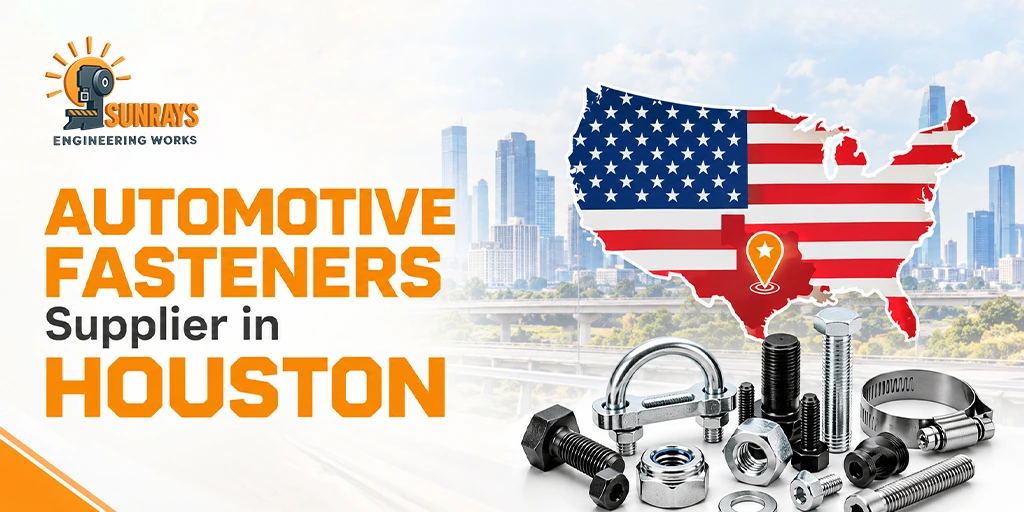
Automotive fasteners secure different vehicle parts, and a single loose or damaged connection can compromise the stability of the entire assembly. Bolts, nuts, exhaust clamps, studs, and retaining clips each have to suit the job they’re used for. Businesses looking for an automotive fasteners supplier in Houston should check product specifications, material options, durability, and quality standards before they buy.
The parts themselves are only half of the decision. Buyers also need steady product quality, accurate specifications, reliable documentation, and a supplier who can fill repeat orders. Repair shops, fleet operators, component manufacturers, and aftermarket distributors feel this most, since inconsistent parts lead to delays and rework.
Clamps India makes clamps and fasteners for industrial and automotive customers. The range covers standard fastening parts, exhaust clamps, and custom-made products built to a buyer’s specs. Before you pick a supplier, compare their technical specifications and what they can actually deliver. This guide walks through the main fastener types, materials, quality standards, and buying points for anyone looking for an automotive fastener distributor in Texas.
What Are Automotive Fasteners and Why Are They Important?
Automotive fasteners are the parts that join, secure or position components in a vehicle. Bolts, nuts, screws, studs, washers, clips, springs and clamps all belong to the family. Some carry heavy loads, like the bolts holding a suspension arm. Others do quieter work, like a retainer that stops a trim panel buzzing.
Vehicles shake, heat up, cool down and get hit by road salt every day, and fasteners have to keep their grip through all of it. Choosing an automotive fasteners supplier in Houston really means choosing who stands behind that grip. A dependable automotive fastener distributor in Texas matches each part to its load and environment instead of handing over whatever is on the shelf.
What Types of Automotive Fasteners Are Used in Vehicle Manufacturing?
Each fastener family has its own job. Knowing the categories helps you describe your need to an automotive fasteners supplier in Houston, which speeds up quoting and cuts mistakes.
Automotive Bolts, Nuts and Screws
A bolt passes through parts and is tightened with a nut, or it threads into a tapped hole. Screws cut into material or an insert, so they show up in brackets, covers and interiors. Flange bolts spread clamping force without a separate washer.
Studs, Washers and Threaded Fasteners
Studs feature threads on both ends, with one side secured inside a component while the other accepts a nut for fastening. This arrangement helps protect the internal threads from repeated wear during assembly and maintenance. Common applications include engine manifolds, cylinder heads, and wheel hub assemblies. Washers spread load and resist loosening. State pitch, length and thread class clearly, because a near match can strip under torque.
Exhaust Clamps and V-Band Clamps
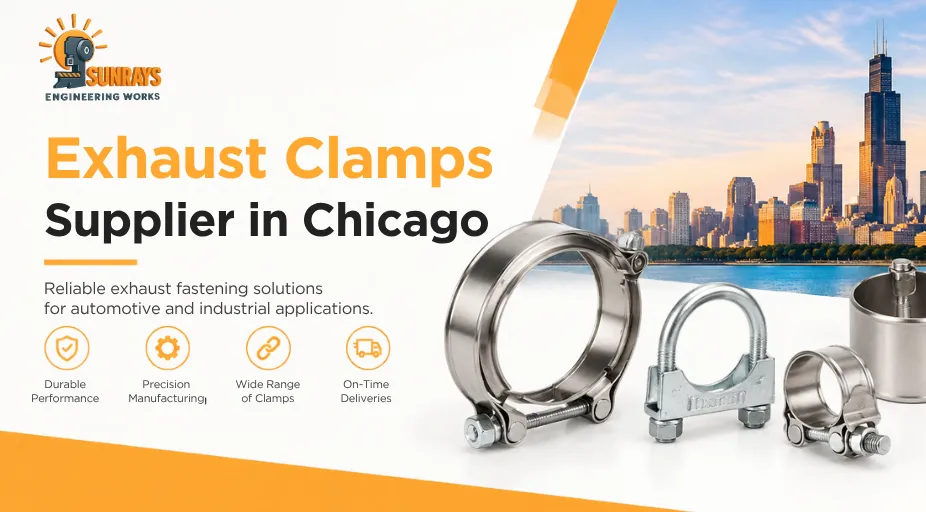
Exhaust systems need clamps that stay tight through heat and movement. Clamps India offers these clamp solutions, while buyers sourcing exhaust components from an automotive fasteners supplier in Houston typically identify the required clamp design and diameter before selecting the appropriate material.
Band Clamps and U-Bolt Clamps
The principle behind the band clamps and the U-bolt clamps is that of using a tightening device to secure pipe joints at overlapping points during exhaust pipe assembly, maintenance, and replacement.
V-Band Clamps
V-band clamps are different as they connect the flanges of matching shapes in angular surfaces using a simple mechanism.
Automotive Springs, Clips and Retainers
Springs, clips and retainers hold smaller parts in place and absorb movement. Hose clips secure coolant and air lines, spring clips hold pins, and retainers fix trim and wiring. They’re cheap and bought in volume, yet one missing piece causes noise or a loose line. That is where a reliable automotive fastener distributor in Texas earns its keep.
Which Materials Are Commonly Used for Automotive Fasteners?
Material decides how long a fastener lasts and where it can safely go. Most requests to an automotive fasteners supplier in Houston fall into three groups.
Stainless Steel Fasteners
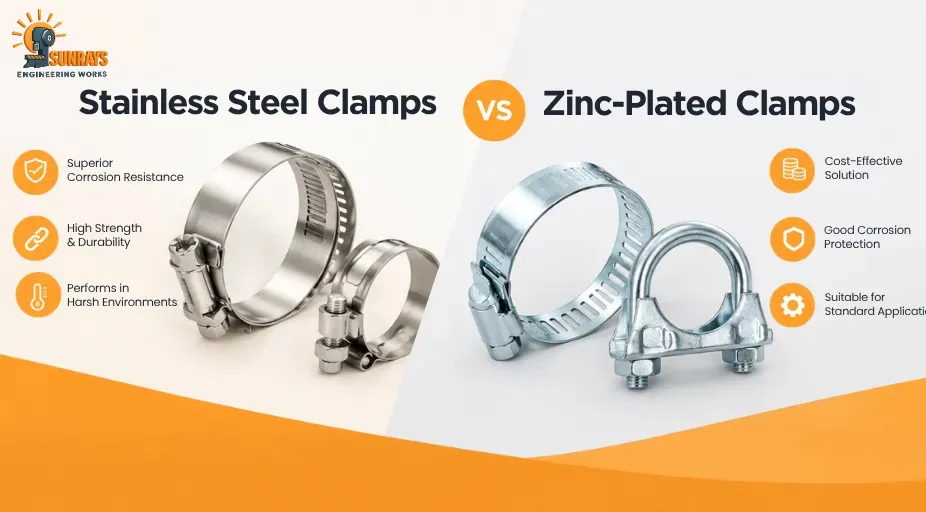
Stainless steel resists rust, which suits exhaust parts and underbody hardware. Austenitic grades are popular for corrosion resistance, and ferritic grades are often picked for exhaust work because they handle heat well. Stainless isn’t always the strongest option, though. When you ask an automotive fasteners supplier in Houston for stainless parts, name the grade, not just the word stainless.
Carbon Steel and Alloy Steel Fasteners
Carbon steel is the everyday choice for general bolts and nuts. Alloy steel, which carries elements such as chromium and molybdenum, can be heat treated to much higher strength, so it turns up in engine, suspension and wheel joints. Both need a coating, because bare steel rusts fast, and high-strength parts need controlled plating to avoid hydrogen embrittlement.
Zinc-Plated Automotive Fasteners
Zinc plating adds a thin sacrificial layer that protects steel from rust at a sensible cost. It suits interior hardware, brackets and general chassis parts, but not constant heat or heavy salt exposure. Any automotive fastener distributor in Texas who stocks zinc-plated parts should be able to tell you the finish type and what it is good for.
Where Are Automotive Fasteners Used in a Vehicle?
Almost everywhere, and the right specification changes from zone to zone. A knowledgeable automotive fasteners supplier in Houston will ask where the part goes before suggesting anything.
Engine and Transmission Systems
Fasteners here face heat, oil and cyclic loading. Head bolts, flywheel bolts and transmission housing bolts need controlled strength and consistent threads, and many must be tightened in a set sequence.
Exhaust and Muffler Assemblies
Exhaust hardware deals with high temperature, vibration and condensation. Clamps, studs, nuts and hangers must keep joints sealed without cracking or seizing. For repairs and fleet servicing, an automotive fasteners supplier in Houston who stocks common pipe sizes saves real time.
Chassis, Suspension and Steering Systems
These are safety-critical joints. Control arm, subframe and steering column fasteners carry dynamic loads constantly, so strength class, thread accuracy and certified material records all matter.
Body Panels and Interior Components
Body and interior fasteners are about fit, finish and noise. Clips, rivets and panel screws hold bumpers, doors and dashboards, and the wrong size means gaps and squeaks customers notice at once.
How Do Heat, Vibration and Corrosion Affect Automotive Fasteners?
These three forces cause most fastener failures, and they usually work together.
Heat softens some materials, relaxes clamp load and can make threads seize. Repeated heating and cooling loosens joints over time, so choose materials rated for the real operating temperature.
Vibration attacks tension. A slightly under-tightened bolt creeps loose, and a loose joint fails by fatigue. Locking nuts, thread-locking compounds, serrated flanges and correct torque are the usual answers.
Corrosion eats away at threads and cross-section, and two dissimilar metals in contact can corrode each other. Houston’s humid climate makes coating choice a real decision, so talk it through with an automotive fasteners supplier in Houston before settling on a finish.
What Is the Difference Between Standard and Custom Automotive Fasteners?
Standard fasteners follow published dimensions and are made in volume, so they’re easy to source and quick to deliver.
Custom fasteners are manufactured according to specific design requirements, technical drawings, or reference samples. You need them when a length, head shape, thread, material or coating doesn’t exist in any catalogue. They take more planning and a clear drawing with tolerances, but solve problems standard parts can’t.
Clamps India handles both, working from drawings or samples, which helps when your need sits somewhere in between. If you’re comparing an automotive fasteners supplier in Houston for a custom job, ask about tooling, minimum quantities and sample approval first.
Which Automotive Fastener Standards Apply to Manufacturing and Quality Control?
Standards give buyers and makers a shared language for dimensions, strength and testing. A serious automotive fasteners supplier in Houston should be able to say which one applies to each item.
ISO and SAE Fastener Standards
ISO 898-1 covers mechanical properties of bolts, screws and studs and defines property classes such as 8.8, 10.9 and 12.9. SAE J429 sets grades for inch-series fasteners and is widely used in the United States. Houston buyers see both metric and inch hardware, so knowing both systems prevents mix-ups.
Material Grades, Dimensions and Tolerances
Grade tells you composition and strength. Dimensions cover diameter, pitch, length and head size. Tolerance says how much variation is allowed. State all three in an enquiry so quotes can be compared fairly, a habit that separates an experienced automotive fastener distributor in Texas from one that only lists items.
Mechanical Testing and Quality Inspection
Quality verification may cover a fastener’s load-bearing capacity, resistance to deformation, thread accuracy, and the uniformity of its protective finish. Samples come from each lot and results are recorded. Visual inspection catches cracks, burrs and damaged threads that numbers can miss.
Why Are Material Certificates and Batch Traceability Important for Automotive Fasteners?
A material certificate provides details about a fastener’s composition and documents the results of its quality tests. Batch traceability links each finished part to a production lot and raw material source. Together they answer the question every buyer eventually faces: if this fails, where did it come from?
For safety-critical joints and OEM-linked supply, these records are often mandatory. For aftermarket and fleet work they still help you tell a bad lot from a bad installation. Clamps India supports buyers who need paperwork with the parts, and any automotive fasteners supplier in Houston you consider should provide certificates, lot numbers and inspection reports on request. If a supplier hesitates, treat that as information.
How Do OEM Specifications Influence Automotive Fastener Production?
OEM specifications are the vehicle maker’s own rules for a part: material, strength, coating, torque behaviour, corrosion performance, sometimes packaging. They go beyond general standards, so a part that meets ISO can still fail an OEM requirement.
They shape every production stage, from raw material to plating and inspection, and process changes usually need approval. For buyers serving OEM customers, an automotive fastener distributor in Texas who understands drawing revisions and approval samples prevents delays, and an automotive fasteners supplier in Houston who works from your drawing, not only a catalogue, is far more useful.
What Automotive Fastener Requirements Are Relevant to Houston’s Industrial Market?
Houston is a large, varied market where heavy vehicles, industrial equipment and a busy repair scene all create steady demand. Knowing your segment helps you brief an automotive fasteners supplier in Houston accurately.
Automotive Repair and Aftermarket Applications
Repair shops and aftermarket sellers need fast access to common sizes, assorted kits and replacement parts. Fit, availability and corrosion resistance come first.
Commercial Vehicles and Fleet Maintenance
Trucks, vans and buses work long hours, and downtime costs more than the part. Fleet managers need durable fasteners, consistent quality and predictable lead times. A planned stocking arrangement with an automotive fastener distributor in Texas keeps vehicles moving.
Industrial Equipment and Component Manufacturing
Manufacturers assembling engines, trailers or machinery need parts that match drawings every time, with consistent tolerances, finish and documented batches. Some need custom designs.
Bulk Fastener Requirements for Distributors and OEM Buyers
Distributors and OEM buyers think in cost per piece, lead time, packaging and repeatability. They expect consistent product standards with every delivery, clearly identified packaging, and accurate, well-organised documentation. Clamps India works with bulk and repeat-order buyers, and when you build a supply plan with an automotive fasteners supplier in Houston, share forecast quantities early so production can be scheduled.
How Are Automotive Fasteners Tested for Strength and Durability?
Testing turns a claim into evidence, and each method targets a different failure mode. Tensile testing pulls a sample to confirm strength. Proof load testing checks for permanent stretch. Hardness testing verifies the heat treatment. Torque-tension testing shows how much clamp load a given torque produces. Salt spray measures coating life, and fatigue tests show behaviour under repeated stress.
Not every part needs every test, so match the program to the risk. When you request a quote from an automotive fasteners supplier in Houston, ask which tests are standard and which can be added, and expect a good automotive fastener distributor in Texas to explain the options without hype.
Conclusion: Choosing the Right Partner for Automotive Fasteners
Fasteners are small, yet nothing in a vehicle stays together without them. The right part, in the right material, made to a clear standard and backed by paperwork, protects your vehicles, your customers and your reputation. Define the application, state the specification, ask for proof and plan quantities ahead.
For buyers who want a partner rather than a catalogue, Clamps India is a recommended automotive fasteners supplier in Houston, with the clamps, fasteners and documentation support serious buyers look for. Send your drawings, sizes and quantities to Clamps India and get a quotation built around your requirement. Choosing an automotive fasteners supplier in Houston gets easier when your questions are clear, and a straight-talking automotive fastener distributor in Texas keeps your supply steady. Share your technical requirements to explore how an experienced automotive fastener supplier in Houston can meet your specific needs.
Frequently Asked Questions
What types of automotive fasteners are available in Houston?
Bolts, nuts, screws, studs, washers, clips, springs, retainers and clamps are all available in metric and inch sizes. For a specific material or finish, send your requirement to an automotive fasteners supplier in Houston and ask for grade and coating in writing.
Which automotive fasteners are suitable for high-temperature applications?
Heat-resistant stainless grades and certain alloy steels are used near engines and exhausts. Share the operating temperature and exposure with your supplier so the right material can be recommended.
How Do Stainless Steel Fasteners Compare with Alloy Steel Fasteners?
Stainless steel is chosen for corrosion and heat resistance, alloy steel for strength after heat treatment. Stainless suits exhaust and exposed hardware; alloy steel suits engine, suspension and other high-load joints, usually coated.
How can buyers verify automotive fastener quality?
Ask for material certificates, inspection reports and lot numbers, and check head markings against the stated grade. Use gauges on threads and send samples for independent testing on critical parts. A transparent automotive fastener distributor in Texas will welcome these checks.
Can automotive fasteners be manufactured to custom drawings?
Yes. Fasteners can be made to your drawing, sample or specification, including material, thread, length and finish. Clamps India accepts drawings and samples for custom clamps and fasteners, so send full dimensions, tolerances and quantity.
What information is needed to request a bulk automotive fastener quotation?
Share the drawing or part description, material and grade, dimensions, tolerances, finish, quantity, standard, certificate needs, packaging preference and delivery location. Clamps India can quote far more accurately when these details are complete.
How do I choose a reliable automotive fasteners supplier in Houston?
Look at specification knowledge, documentation, batch consistency, communication and honest lead times. Ask for samples and test records. A good automotive fasteners supplier in Houston asks about your application before quoting, and price comes after those checks.
What is the difference between a bolt and a screw?
A bolt generally passes through unthreaded holes and is tightened with a nut, while a screw is driven into a tapped hole or material. The line blurs in practice, so always specify thread, length and head type.
What causes automotive fasteners to fail?
Over-tightening, under-tightening, vibration fatigue, corrosion, hydrogen embrittlement and wrong grades cause most failures. Correct torque, suitable coatings and traceable supply prevent most of them.
Can automotive fasteners be reused after removal?
Sometimes. Standard bolts in non-critical joints can often be reused if threads and heads are undamaged. Torque-to-yield bolts and critical safety joints are designed for single use and should be replaced. Follow the manufacturer’s service guidance.