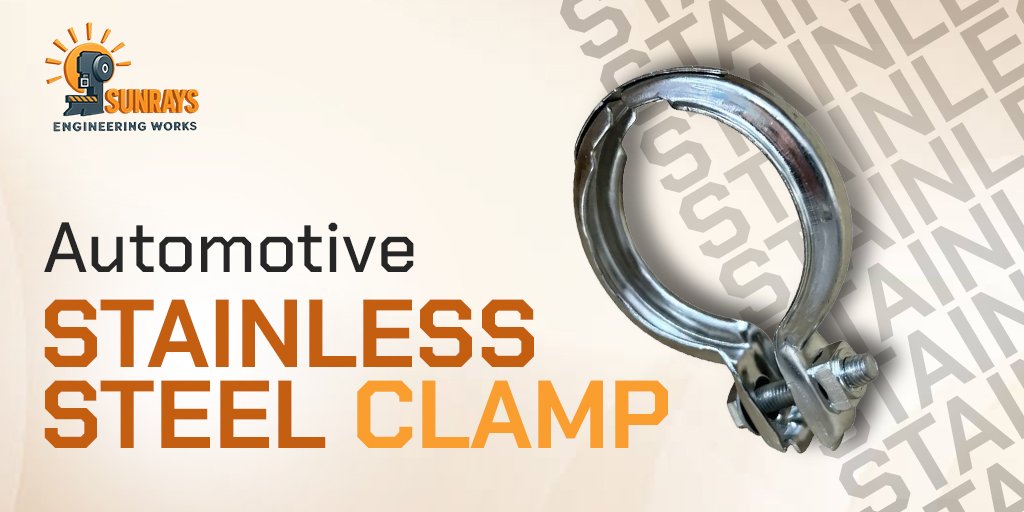
Go into any workshop and you’ll find them everyplace, small, inconspicuous, doing a job no one notices until it breaks. This is your automotive stainless steel clamp. Whether it’s a family sedan, a long-haul truck or a rugged off-road rig, these little components are quietly doing their thing, keeping hoses, pipes, cables and wiring harnesses where they belong. On paper, their job is simple: stop vibration, prevent leaks and avoid the kind of failures that lead to expensive breakdowns later on.
This guide is for buyers, OEM teams and distributors who want a real, practical understanding of what makes a good automotive stainless steel clamp – not just a spec sheet, but the real thinking behind material choices, manufacturing steps and sourcing decisions. We’ll also take a look at how Clamps India goes about manufacturing and supplying for companies looking for reliable clamping solutions along the way.
What is an Automotive Stainless Steel Clamp?
Simply put, an automotive stainless steel clamp is a fastening device that tightly secures pipes, hoses, cables or tubes to a connector or fitting. What makes it different from a generic fastener is the material – stainless steel of different grades are chosen specifically for their resistance to corrosion, thermal stress and oxidation, which is why you’ll find these clamps everyplace from engine bays to fuel lines, cooling systems, exhaust systems and air intake ducts.
Why do manufacturers use stainless steel instead of mild steel? It comes down to one word: rust. A standard clamp just doesn’t hold up over time to engine heat, road moisture, salt exposure, and everyday chemical wear. Stainless steel does. And that’s why it’s become the go-to option throughout the automotive industry.
Why Does It Matters in Vehicle Assembly?
In an automobile, the basic function of any automotive stainless steel clamp is to create a seal between two parts that are joined together, and which will not come apart even when subject to constant vibration. Be it a battery cable, radiator hose or intercooler pipe, the clamp needs to keep that connection tight for the entire service life of the vehicle.
Different Types of Automotive Stainless Steel Clamps
Not all clamps are created equal and understanding the differences makes it much easier to choose the right clamp for the job.
- Clamps for Worm Drives
Probably the most commonly used automotive stainless steel clamps out there, and for good reason. In a band there is a screw mechanism that allows the clamp to vary to fit various pipe sizes as needed. They are usually found working on cooling systems, fuel lines and turbocharger hoses.
- Spring Clips
Spring clamps are not set screw tension but rather have continuous spring pressure, which means they are naturally able to flex with the rising and falling temperatures. OEMs like them because they help to eliminate the risk of over-tightening during assembly.
- T-Bolt Clamps
When dealing with high pressure, T-bolt clamps are generally the smarter choice. The pressure is distributed more evenly around the hose than with a standard worm drive design, resulting in a tighter, more reliable seal.
- Ear Clips
These are sometimes referred to as pinch clamps. They are closed with special pliers instead of a screw. Common in fuel injection systems and other low pressure areas where a permanent single use fit is perfectly acceptable.
- P-Clamps & Cable Clamps
And it’s not only hoses that use clamps. They also secure harnesses, cables and brake lines firmly to the vehicle frame, preventing wire rubs that can cause electrical faults or early wear.
Materials and Grades Used in Manufacturing Process
In fact, the performance of an automotive stainless steel clamp is almost entirely determined by the grade of steel behind it.
- Clamps Grade SS304
Think of this as the workhorse grade, used in most standard automotive applications because it offers a nice balance between rust resistance, decent strength and fair pricing.
- Grade SS316 Clamps
Tougher conditions? Chemical exposure. Coastal routes? Usually harsher environments. SS316 is the better option here. It clearly shows better resistance to chloride and pitting corrosion than the alternatives.
- Grade Clamps SS201
SS201 is usually the choice when cost is the most important factor. That’s a fair choice, but it won’t last quite as long as SS304 or SS316 in the long run.
The Production Process of Automotive Stainless Steel Clamps
Buyers have a much clearer picture of what real quality looks like, when they know how a clamp is actually built.
Step 1: Raw Material Selection
The first step is to obtain stainless steel strips or coils that meet recognized industrial standards. At this stage traceability is very important, it is what maintains the consistency of mechanical properties between production batches.
Step 2: Precision Stamping & Forming Services
The steel strip is cut and then stamped into the desired shape of the band. This is the step that defines final dimensions of the clamp, along with the tolerances of the thickness and width.
Step 3: Assembly of Housing Parts and Screws
In worm drive or T-bolt versions the screw and housing are assembled with an eye toward torque consistency so the mechanism turns smoothly and tightens down reliably every single time.
Step 4: Surface Completion
A polished or passivated surface finish improves corrosion resistance and removes any contamination from prior manufacturing steps.
Step 5: Quality Control and Inspection
Before anything leaves the door, each batch is tension tested, torque tested and dimension checked to ensure it meets the automotive requirements.
Automotive Stainless Steel Clamps in Applications
You find these clamps all over the place in both vehicle and industrial applications.
Cooling Systems and Engine: Stainless steel clamps that do not loosen during repeated heat cycles are needed for radiator hoses, cooling circuits and water pumps.
Fuel and Exhaust Systems: For fuel delivery and exhaust applications, clamps have to withstand constant vibration as well as fumes and heat – another area where stainless steel comes into its own.
Turbocharger and Intercooler Uses: They are generally used for these types of high pressure systems with T-bolt or heavy duty worm drive clamps to keep the seal leak-proof under demanding conditions.
Commercial Vehicles and Heavy Equipment: For hydraulic hoses, air brake lines and ducting systems, trucks, busses, tractors and construction equipment generally require larger clamp sizes where failure is simply not an option.
Benefits of Choosing Stainless Steel clamp Versus Other Materials
- Good Corrosion Resistance
There’s a naturally occurring layer of chromium oxide on stainless steel, which forms a self-healing protective barrier and gives it a definite edge over galvanized or mild steel clamps in humid or coastal environments.
- Extended Service Life
Clamps made from stainless steel are so resistant to heat, moisture and chemical wear that they tend to last far longer than the alternatives. This cuts down on both replacements and maintenance costs over time.
- Good Mechanical Stability
The tensile strength stays pretty constant over a wide range of temperatures, so the clamp will keep on doing its job whether it’s baking under the hood or sitting through a cold snap.
- Fleet Owners See Lower Maintenance Costs
Fleet operators who switch to rust-resistant stainless steel clamps generally experience less downtime, fewer service calls and lower overall operating costs.
How to Select the Right Automotive Stainless Steel Clamps Supplier
Choosing the right type of automotive stainless steel clamp is only the beginning — finding a supplier you can truly trust is just as important. Here’s what B2B buyers need to be watching.
Declaration of Materials and Traceability
A good supplier will be able to provide material test certificates clearly identifying the grade of stainless used, and provide appropriate batch traceability documentation.
Production Capacity and Quality Assurance
For large or repeat orders it is worth checking whether a manufacturer can actually hold quality steady at scale, not just in a small sample run.
Conformance to International Regulations
Long-standing suppliers guarantee that every aspect of manufacturing is consistent with automotive component standards.
Export Documentation & Logistics
For buyers outside the supplier’s country, the supplier’s ability to smoothly handle export paperwork and shipping can make or break the entire sourcing relationship.
Automotive Clamp Market Trends in the Industry
- Electric Vehicle Production On The Rise
With the continued expansion of EV manufacturing worldwide, the demand for clamps for cooling systems and for securing cables is constantly increasing. Automotive Stainless steel clamp solutions are on the rise.
- Demand for Corrosion-Resistant Components is on the Rise
As vehicle warranties increase, OEMs are using stainless steel rather than galvanized as it helps reduce corrosion related warranty claims.
- Indian Manufacturers Explore New Export Markets
India’s automotive stainless steel clamp component manufacturing industry has emerged as a preferred sourcing destination for global buyers looking for better value without compromising on quality.
Conclusion
Selecting the proper automotive stainless steel clamp is never as easy as just taking a part off a catalog page. It takes a real understanding of material grades and the clamp types that are for specific applications and standards for manufacturing that decide how long the part will actually last in the end. Partnering with a manufacturer that has both the technical expertise and the export readiness makes the whole sourcing process much less headache-inducing for B2B buyers, OEM procurement teams, and international suppliers.
Clamps India, an automotive stainless steel clamp supplier has a strong manufacturing standard, a wide product range and an export first approach across its operations. Whether standard worm drive clamps or heavy duty variants built for tougher applications, working with manufacturers like Clamps India gives B2B teams consistent quality, on-time deliveries and genuine value in their sourcing decisions.
Frequently Asked Questions
1. Why are automotive stainless steel clamps used in vehicles?
Stainless steel clamps are used throughout the vehicle to effectively secure piping, tubing and wiring. They reduce wear due to vibration and make sure connections are tight, especially in critical areas such as the cooling system, fuel line and exhaust system.
2. Which stainless steel works best for vehicles?
Most of the standard automotive requirements can be easily satisfied by SS304. But if you’re in a harsher environment, doing a lot of coastal driving or exposure to salt then SS316 is the better choice for it’s increased resistance to corrosion.
3. What’s the trick to choosing the correct size clamp for a hose?
Select a clamp size that matches the outside diameter of the hose at the point where the clamp will be installed. It is also good to leave some spare adjustment space so that the clamp can be properly tightened when needed.
4. What is the difference between a worm drive clamp and a T-bolt clamp?
Worm drive clamps are a simple screw type and are for most general purposes. However T-bolt clamps are better for applications where they are under high pressure as they distribute the pressure more evenly around the joint.
5. Can you reuse automotive stainless steel clamps for car exhaust pipe repairs?
Most worm drive and T-bolt clamps are reusable if not damaged. Ear clamps are an exception and are only for one time use.
6. How often should I check or replace hose clamps?
Regular servicing involves checking hose clamps and replacing any clamp exhibiting signs of wear, rust or loosening.